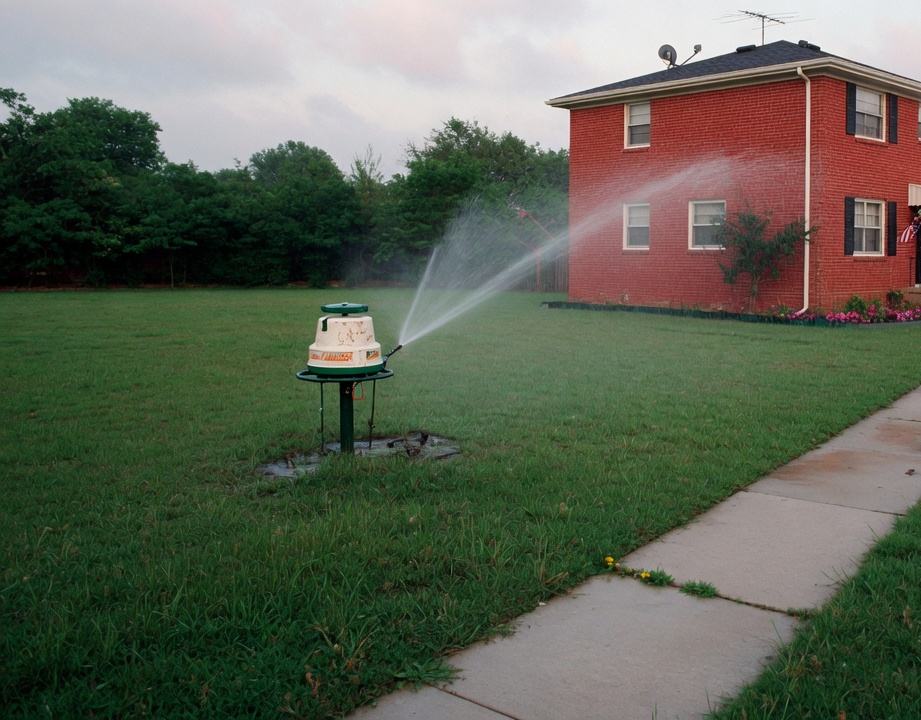
You set your sprinklers to run, step outside, and watch a fine mist sail across the driveway, onto the sidewalk, and into your neighbor’s yard. Meanwhile, the brown patch near your fence stays dry. That’s wind drift, and it’s one of the most common reasons Lewisville homeowners search for sprinkler repair in Lewisville to get their irrigation system back on track.
North Texas wind doesn’t take many days off. Breezes coming off Lewis Lake, gusty spring fronts, and hot summer afternoons can push your water right where you don’t want it. The result is higher water bills, uneven lawns, and a system that works harder for worse results.
This guide covers what wind drift is, how it hurts your irrigation system, and the practical fixes that keep water on your grass.
Quick takeaways:
- Wind drift happens when breezes blow sprinkler spray off target, wasting water and leaving dry spots.
- Fine mist from high pressure or worn nozzles drifts the most.
- High-efficiency nozzles, smart scheduling, and micro-irrigation can cut drift sharply.
- A professional coverage analysis shows exactly where your water is going.
What Is Wind Drift in a Sprinkler System?
Wind drift is the movement of sprinkler water away from its intended target because of wind. Instead of landing evenly across your lawn, droplets get carried sideways, onto hard surfaces, or into the air, where many of them evaporate before they ever touch the ground.
Small droplets are the biggest culprits. The finer the spray, the lighter each droplet is, and the easier it is for even a mild breeze to carry it away. A system that produces a heavy mist can lose a lot of water on a breezy morning.
Common Signs of Wind Drift
You don’t need special tools to spot the early warning signs. Watch for:
- Wet sidewalks, driveways, or streets after every watering cycle
- Dry or brown patches on the windward side of your yard
- Soggy, overwatered areas on the downwind side
- Visible misting or fogging from sprinkler heads
- Water bills creeping up without a greener lawn to show for it
If you notice two or more of these, your system likely has a drift problem worth fixing.
Why Lewisville Lawns Are Especially Prone to Wind Drift
Lewisville sits in an open stretch of North Texas where wind moves freely. Spring storms bring strong gusts, and summer afternoons often stay breezy. Homes near the lake or in newer neighborhoods with few mature trees feel the wind even more.
Heat adds to the problem. When temperatures climb, drifting droplets evaporate faster. Water that blows off course and water that disappears into hot air both add up to the same thing: money spent on water your lawn never receives.
Many local systems were also installed years ago, before today’s water-efficient parts were common. Older spray heads tend to produce finer mist, which makes them easy targets for wind.
How Wind Drift Hurts Your Sprinkler System’s Efficiency
Wind drift isn’t just a cosmetic issue. It affects your lawn, your wallet, and your system.
Uneven Coverage
When wind pushes water one direction, some areas get too much and others get almost none. You end up with stressed turf, bare patches, and spots where weeds or fungus can take hold.
Wasted Water and Higher Bills
Water that lands on concrete or evaporates mid-air is water you paid for. Over a full Texas summer, that waste can add up fast.
Overcompensating Makes It Worse
Here’s the part most people miss: when homeowners see dry spots, they often add more watering time. That pumps out even more water to blow away, floods the downwind areas, and still doesn’t fix the root cause.
Mini-summary: Wind drift creates uneven lawns, raises water costs, and tempts you into longer run times that only deepen the problem.
Proven Solutions to Reduce Wind Drift
The good news is that wind drift is very fixable. The right combination of repairs, upgrades, and scheduling changes can keep water on target, even on breezy Lewisville days.
1. Start With a Professional Coverage Analysis
Before replacing parts, you need to know exactly where your water is going. A coverage analysis maps how evenly your system distributes water across the lawn. It reveals overlap gaps, misaligned heads, and zones that lose the most water to wind.
This step keeps you from guessing. Instead of replacing every head in the yard, you fix what actually needs attention.
2. Upgrade to High-Efficiency Nozzles
Traditional spray nozzles often release a fine mist that wind carries easily. High-efficiency nozzles deliver water in heavier, thicker streams. Those larger droplets resist wind and land where they’re aimed.
Many of these nozzles also apply water more slowly. That gives the soil time to absorb it rather than letting it run off. For many homeowners, this single upgrade makes a noticeable difference within a few watering cycles.
3. Check and Correct Water Pressure
Excessive pressure is a hidden cause of misting. When pressure runs too high, water exits the nozzle as a fog instead of a spray. Pressure testing confirms whether your system runs within the right range. If it doesn’t, pressure-regulating parts or valve adjustments can bring it back in line.
A flow rate test is often done alongside it to check that each zone delivers the right amount of water.
4. Use Customized Water Scheduling
Timing matters as much as hardware. Wind in Lewisville is usually calmest in the early morning hours, before the sun heats the ground and stirs up the air. Watering then means less drift and less evaporation.
A customized watering schedule accounts for:
- Your soil type and how fast it absorbs water
- Sun and shade in each zone
- Grass and plant types across your yard
- Seasonal changes in heat and wind
Splitting long run times into shorter “cycle and soak” sessions also helps water soak in instead of running off.
5. Add Weather-Based Smart Controls
A Wi-Fi controller can adjust watering based on local weather conditions. Some can skip or delay cycles when conditions aren’t right, such as during rain. A weather-based irrigation evaluation confirms your controller is actually responding to conditions instead of running on autopilot.
6. Switch Problem Areas to Micro-Irrigation
For flower beds, shrubs, narrow side yards, and strips along sidewalks, spray heads are often the wrong tool. Micro-irrigation, such as drip lines, delivers water directly at the root zone. Since it doesn’t spray water into the air, wind simply can’t blow it away.
Narrow strips near pavement are some of the worst offenders for wind waste, so converting them to drip is often a smart move.
Mini-summary: Diagnose first with a coverage analysis, then combine better nozzles, correct pressure, smart scheduling, and micro-irrigation where it makes sense.
Real-World Scenarios: What Wind Drift Fixes Look Like
The corner lot with a wet street. A homeowner on a corner lot noticed water pooling in the gutter after every cycle. A coverage analysis showed several heads spraying too far and producing heavy mist from high pressure. Adjusting pressure and installing high-efficiency nozzles kept the water on the grass.
The side yard that never stays green. A narrow strip between two houses acts like a wind tunnel. Spray heads there lost most of their water to drift. Converting the strip to drip irrigation solved the dry patches and cut wasted water.
The midday watering habit. A family ran their sprinklers in the late afternoon, right when the wind peaked. Moving the schedule to early morning and splitting the cycles reduced drift without touching a single part.
Common Mistakes to Avoid
Even well-meaning homeowners can make wind drift worse. Steer clear of these:
- Adding more watering time to fix dry spots instead of fixing coverage
- Watering during windy afternoons when drift and evaporation peak
- Ignoring misting heads, which usually point to a pressure problem
- Mixing nozzle types in one zone, which creates uneven watering
- Using spray heads in narrow strips where drip would work better
- Skipping regular checkups, letting small issues turn into costly repairs
Why Professional Sprinkler Repair in Lewisville Makes the Difference
Wind drift often has more than one cause. A misaligned head, a worn nozzle, high pressure, and a bad schedule can all overlap. Fixing just one may help a little, but it rarely solves the whole problem.
Professional diagnostics look at your entire system. That can include coverage analysis, pressure and flow rate testing, controller checks, and even soil moisture testing to see how well your lawn holds water. With the full picture, repairs target the real issues instead of the symptoms.
A trained technician can also spot related problems while on-site, such as hidden leaks, electrical faults, or backflow device issues. Catching these early protects your lawn and saves money down the road.
Ask yourself: is your system watering your lawn, or the neighborhood? If you’re not sure, a professional inspection gives you a clear answer.
Keep Your Water Where It Belongs
Wind drift wastes water, leaves your lawn patchy, and drives up your bills. But you don’t have to accept it as part of living in North Texas. With a proper coverage analysis, high-efficiency nozzles, correct pressure, smarter scheduling, and micro-irrigation in the right spots, your system can water evenly even on breezy days.
The fastest way to fix the problem is to find its true cause. Our team provides expert sprinkler repair in Lewisville, along with diagnostics and upgrades built to stop wasted water and bring your lawn back to life.
Schedule service today. Call 940-239-0007 and let us help you get every drop working for your lawn.